

Global Leadership Position
Over the past decade of rapid growth, China has firmly established itself as the largest e-commerce market in the world.
According to data from the General Administration of Customs of China, in 2024 the scale of cross-border e-commerce reached 2.71 trillion RMB (approximately USD 302 billion), representing a 14% year-on-year increase. These figures reaffirm the feasibility of China’s path toward becoming a true “digital trade powerhouse.”
National Strategic Infrastructure
China has developed a “four-in-one” customs supervision code system (9610/1210/9710/9810), while simultaneously building the largest bonded and overseas warehouse network worldwide, reshaping the global trade infrastructure.
- Domestic hubs: Guangzhou, Shenzhen, Dongguan.
- Overseas hubs: Thailand, Singapore, the Philippines, Vietnam, and Russia.
Bonded warehouses and overseas distribution centers have become a mandatory backbone for cross-border e-commerce.
Technology and Ecosystem Development
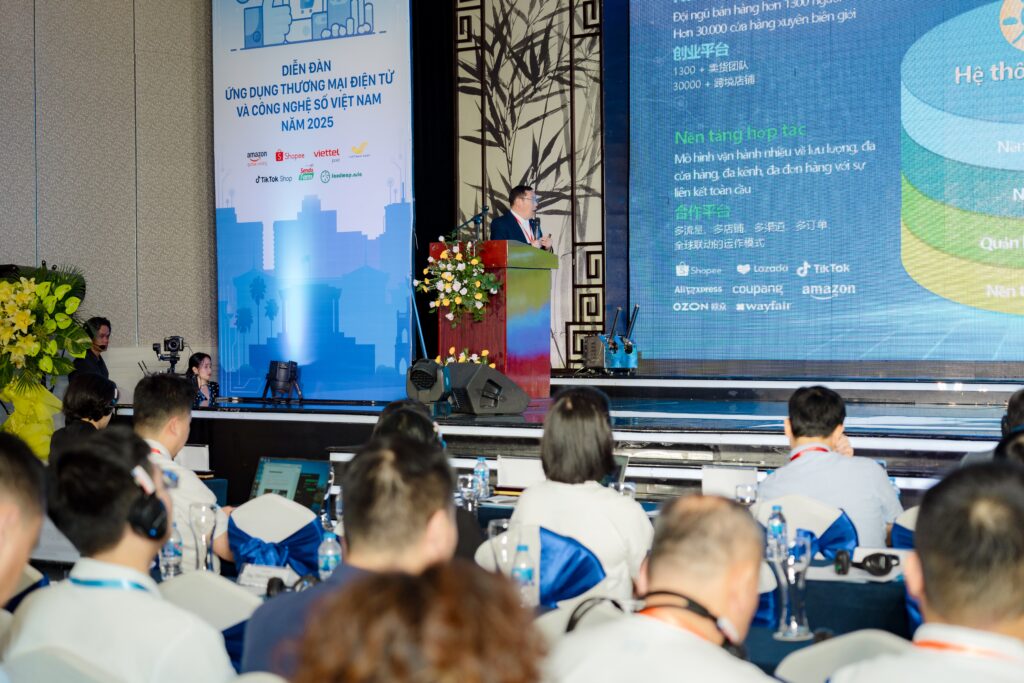
China is driving the creation of a comprehensive digital ecosystem:
- Technology: ERP systems, AI, and advanced digital platforms.
- E-commerce: multi-location, direct-to-consumer platforms, forming a closed loop between digital consumption and digital trade.
- Supply chain: integrated upstream–downstream connections, advancing toward F2C and F2B models.
Cross-border Operations and Logistics
- Providing multi-channel delivery services (FBA) and building a complete cross-border logistics system.
- Professional teams managing store design, product selection, pricing, marketing, logistics, and after-sales services.
- Offering end-to-end store operation services, with profit-sharing models and revenue commitments to help businesses stand out in highly competitive markets.
Talent Development and Industry–Academia Collaboration
Human resources remain a cornerstone for sustainable growth:
- Establishing practical cross-border e-commerce training programs and digital commerce academies.
- Training professional KOLs/KOCs, and building coworking spaces and livestream training centers.
- Collaborating with universities to nurture the next generation of cross-border e-commerce talent.
Strategic Positioning and International Cooperation
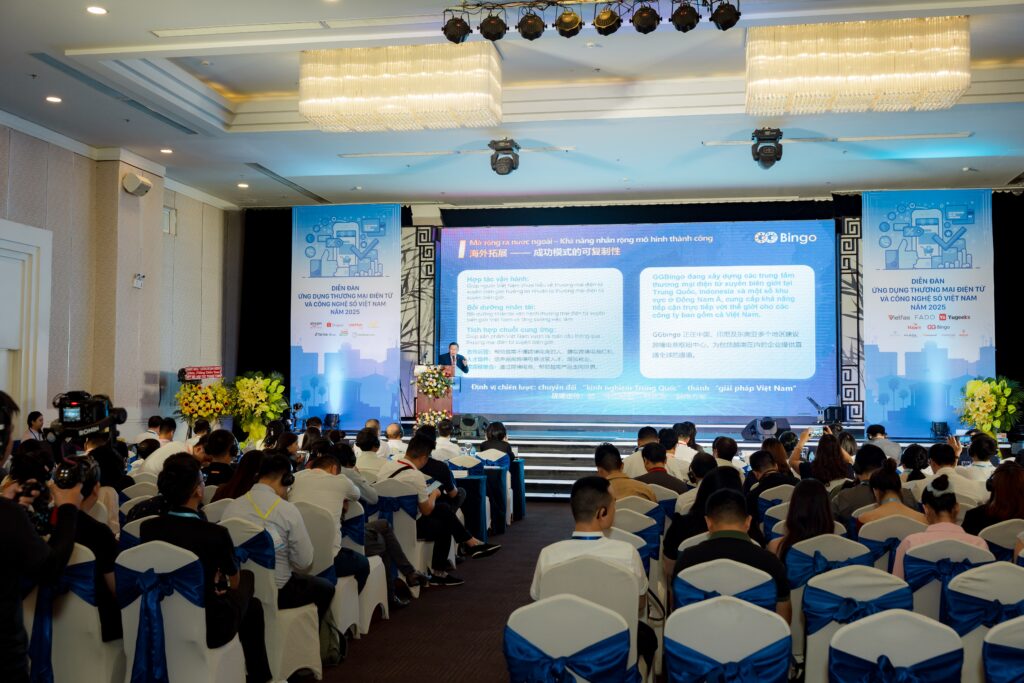
- Strategic positioning: transform “China’s experience” into “Vietnam’s solutions.”
- Operational partnerships: support Vietnamese newcomers in cross-border e-commerce to gain market access and profitability.
- Supply chain integration: enabling Vietnamese products to expand globally.
- Talent development: building a pool of cross-border e-commerce professionals, creating more employment opportunities.
Market Diversification and Brand Building
- Diversifying export markets: expanding beyond the US and China into ASEAN, the Middle East, Africa, and Latin America.
- From OEM to D2C: fostering independent “Made in Vietnam” brands with higher added value.
- Multi-channel presence: Amazon, TikTok Shop, JD.com, Lazada, and Shopee operating simultaneously.
- Global logistics expansion: building overseas fulfillment centers and warehouses to reduce costs and shorten delivery times.
Government Policy and Support
The Chinese government continues to issue supportive cross-border e-commerce policies while improving logistics, payment systems, and industry standards, creating strong momentum for enterprises to accelerate digital transformation and enhance global competitiveness.
Discussion link: https://bitly.li/I3Po